For high-demand commercial sites in Kent and East Sussex, the case for a private water borehole has shifted decisively in 2026. Six months of restrictions, two regulator investigations and a 36% bill rise locked in through 2030 — more sites are now taking their water supply into their own hands.
We’ve drilled and licensed water boreholes across Kent and East Sussex for more than twenty-five years, and the conversations we’re having with businesses, estates and farms in spring 2026 are qualitatively different to those of two years ago. Sites that would previously have dismissed a private supply as exotic now ask about it as the obvious next step. The reasons sit firmly in the public record — and unlike the conditions that preceded them, they aren’t going away.
For 202 days between 18 July 2025 and 5 February 2026, around 1.4 million South East Water customers across Kent and East Sussex lived under a Temporary Use Ban — the longest hosepipe restriction in the region’s recent memory. The restriction prohibited domestic hosepipe use for gardens, vehicle washing, paddling pools and similar activities. Sussex customers had additional restrictions imposed from 17 October 2025.
The trigger was the driest spring in England since 1893. Demand for water across the South East peaked at 680 million litres on 30 June 2025 — the highest single-day figure ever recorded for that time of year. The ban was lifted in early February after sustained rainfall through the late autumn allowed reservoir and aquifer levels to recover.
A Temporary Use Ban is, by definition, a domestic-only restriction — golf courses, working farms, hospitality venues and other commercial water users were not directly under the ban. But the underlying supply pressure that triggers a 202-day ban is exactly what creates wider operational issues for high-volume commercial users on the same network: connection-volume scrutiny, tariff increases, and tighter scrutiny of any new commercial connection. The 2025–26 ban is only the most recent expression of a deeper pattern.
A region under pressure
Most of Kent and East Sussex falls within an area officially designated by the Environment Agency as ”serious water stress” — a classification confirmed in the EA’s most recent assessment in July 2021. The designation reflects three things: high population density relative to natural water availability, climate-change projections pointing to drier summers, and an ageing infrastructure base unable to keep pace with demand growth.
The structural response has been slow. The most recent major reservoir built in the UK opened more than thirty years ago. In June 2025 the Government announced support for the construction of nine new reservoirs by 2050, with sites in Kent and East Sussex among the priorities — but these are decade-plus projects, not solutions for the current decade.
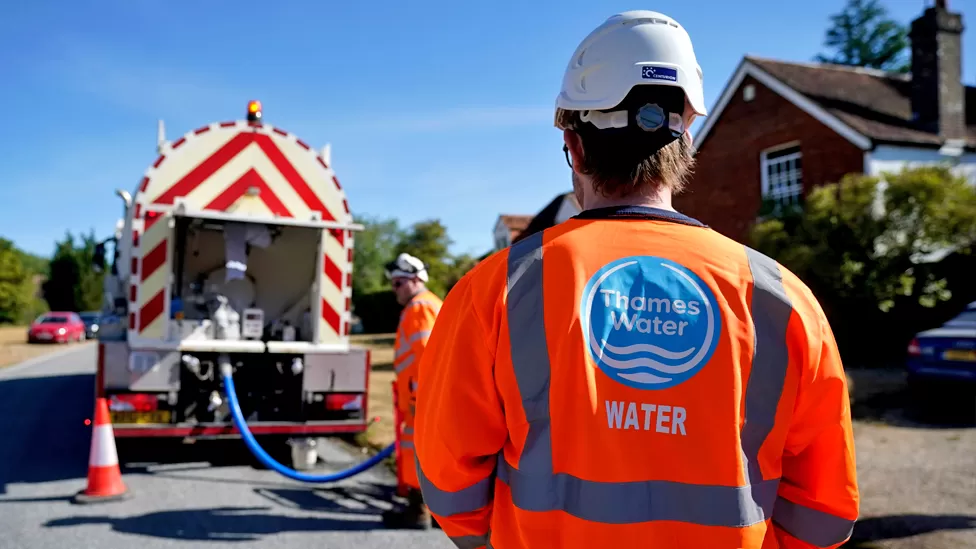
In the meantime, the existing supply network has been under visible stress. In late November and early December 2025, a failure at the Pembury water treatment works near Tunbridge Wells left tens of thousands of customers without running water. Tunbridge Wells Borough Council declared a major incident. Schools closed. Restaurants, hotels and hospitality businesses suspended trading.
In early January 2026, freeze-thaw effects following a cold snap, combined with Storm Goretti, caused intermittent supply loss for more than 30,000 homes across the same network. Both episodes prompted formal regulatory responses: Ofwat opened an investigation into South East Water’s repeated supply interruptions, and the Drinking Water Inspectorate opened parallel investigations in early December and mid-January.
These are public-record incidents reported by the regulator, the council and national news outlets — not commentary by us. They do, however, sit alongside earlier supply failures (the June 2023 mass outage, the February 2023 freeze-thaw incidents) that show the pattern is not new.
Bills are rising too
On 19 December 2024, Ofwat published its PR24 Final Determination — the regulatory settlement covering water company prices for the 2025–2030 period. The headline number for customers across England and Wales is an average household bill increase of £157 over five years, or 36% in real terms — with £86 of that landing in 2025–26 alone.
For commercial sites, large estates, hospitality businesses and farms with materially higher consumption than a typical household, the absolute cash impact is significantly larger. PR24 also approved £104 billion of water-company spending over the period — a 7% reduction on what companies had requested, reflecting Ofwat’s compromise between investment need and bill affordability. Several water companies have appealed the determination to the Competition and Markets Authority, which delivered its final report in March 2026.
Whatever the eventual outcome of those appeals, the trajectory for commercial water bills across the South East is firmly upward through 2030.
What businesses, estates and farms are doing
For high-volume water users, none of this is breaking news. The interesting question is what to do about it. Increasingly, the answer for sites with the right geology and operational profile is to look beyond the mains.
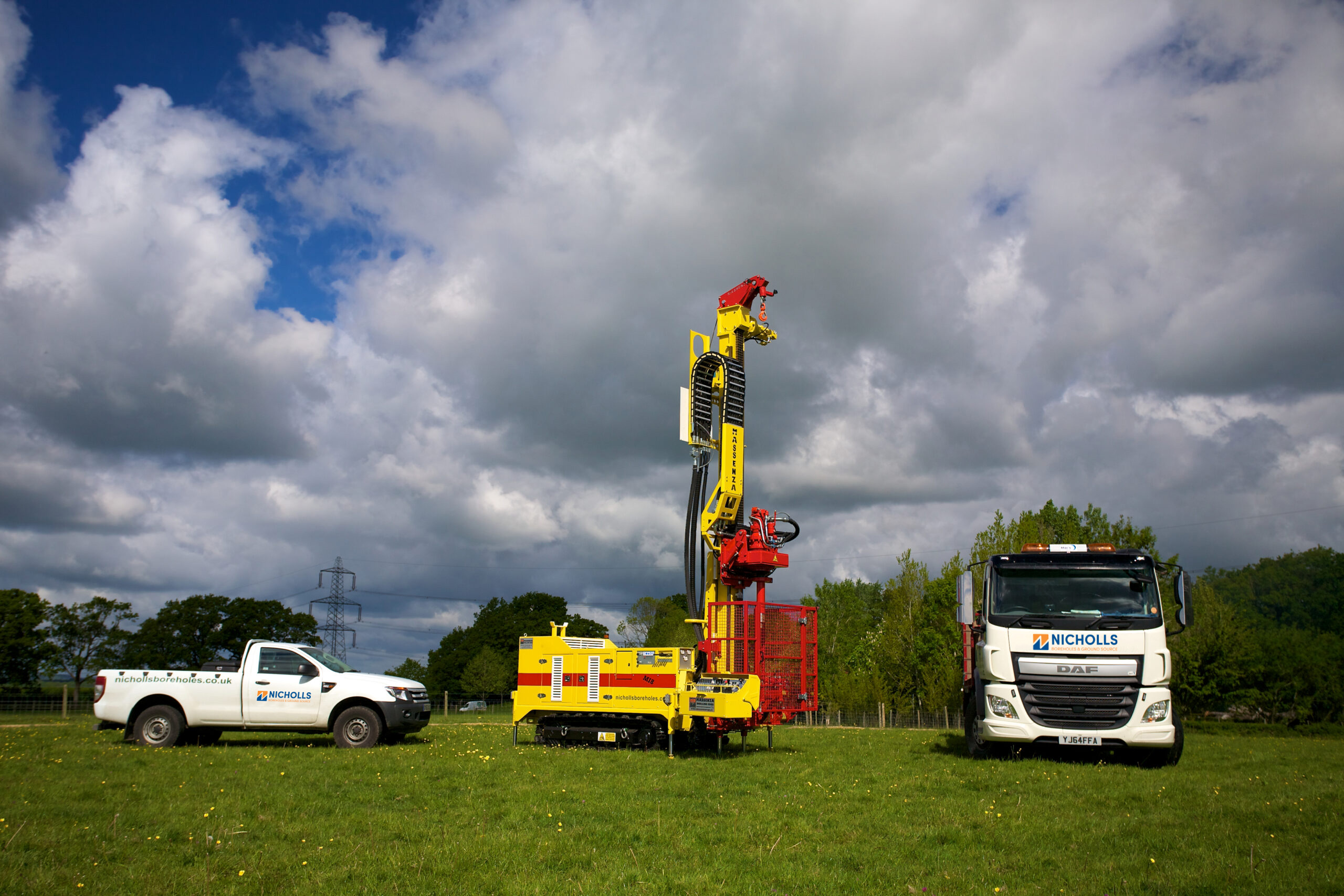
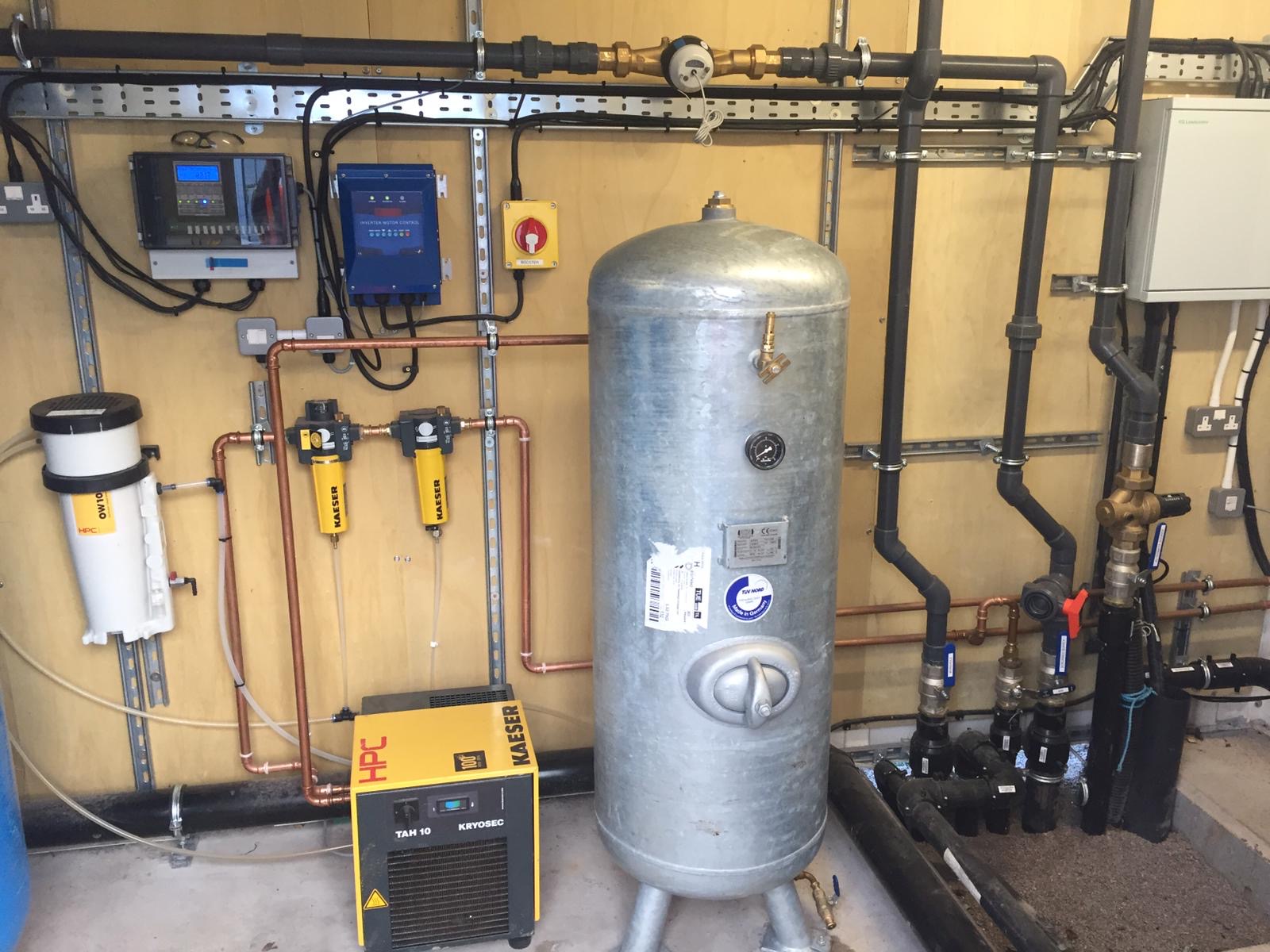
A private water borehole, drilled into the aquifer beneath the property and licensed where required by the Environment Agency, is hydraulically independent from the public supply network. Hosepipe bans don’t apply. Network outages don’t apply. Treatment-works failures don’t apply. Most commercial installations also retain the existing mains connection as an automatic-switchover back-up — so the practical effect is hydraulic diversity, not full off-grid: two independent supplies rather than one. The marginal cost is the electricity to run the pump plus annual servicing — largely insulated from the trajectory of mains tariffs.
For commercial sites in Kent and East Sussex, the geology is generally favourable. The chalk aquifer beneath North Kent, the South Downs and parts of East Sussex is one of the most productive in England, supporting the public supply network for the whole region. The Lower Greensand beneath the Sevenoaks and Maidstone areas offers similar yields. The Wealden Clay of the High Weald — Tunbridge Wells, Crowborough, Uckfield, Wadhurst — requires deeper drilling through clay to reach underlying sandstone, but is still routinely viable for water supply and exceptionally well-suited to closed-loop ground source heat pumps.
Capital, or no capital? Two routes to a private supply
For a large commercial site, the conversation usually starts with capital. A complete water-borehole project — site assessment, hydrogeology, EA licence where required, drilling, pump-and-treatment, commissioning — sits in a £30,000 to £150,000+ range in Kent and East Sussex, depending on geology, daily volume and any treatment needed. For a working farm or hospitality business, that’s a meaningful capital decision.
The alternative model is Water-as-a-Service (WaaS). We design, fund, build, own and operate the borehole infrastructure on the customer’s site under a 20-year contract. There’s a small initial capital contribution at the outset; we fund the rest, and the customer pays a fixed monthly fee thereafter — typically 20–40% below mains rates. The bulk of the project comes off the capex line, predictable budgeting takes over, and the supply is in service from day one. The model has been adopted most readily by larger commercial sites, data centres and multi-year operations where preserving capital for the core business matters more than the long-run unit-cost optimisation a direct purchase eventually delivers.
Either route — direct capital purchase or WaaS — gets to the same operational outcome: a hydraulically independent supply not subject to network outages, hosepipe bans or Ofwat tariff settlements.
The licensing picture
Private water boreholes for low-volume use don’t require a licence. Below 20 cubic metres per day (around 4,400 imperial gallons), no Environment Agency abstraction licence is required — that volume covers most domestic users and many smaller commercial sites. Above 20 m³/day, a Water Resources Abstraction Licence is required, alongside hydrogeological reports demonstrating that the abstraction won’t damage other water-dependent users or the environment.
The licensing process is well-established but it isn’t quick — typically four months from a complete application to a determination, longer where the EA requests additional hydrogeological work. Sequencing the licence application alongside the drilling and hydrogeology phases is the difference between a project that takes around 16-20 weeks from assessment to a fully commissioned, compliant supply, and one that drags out over a year.
This is where in-house expertise matters disproportionately. We handle abstraction licences across Kent and East Sussex through our in-house Licensing & Consulting team — they know what the regional EA case officers expect to see, hold the existing relationships, and don’t wait on third-party hydrogeologists to deliver evidence packs. For a project sponsor weighing a borehole, the licensing risk is usually the largest unknown; for us, it’s a routine workflow that runs in parallel with the drilling rather than blocking it.
Closing thought
The enquiries we’re seeing in spring 2026 are markedly different in character to those of even a year ago. The conversation used to be primarily about cost. Now it’s increasingly about resilience — the ability to keep operating regardless of what the public network does — and about predictability — taking control of a cost line that is otherwise on an above-inflation upward path through 2030.
For some sites, the answer is straightforward. For others, geology, demand, capital constraints or licensing complexity mean a borehole isn’t the right answer. Either way, a free site assessment that looks at the geology, the demand profile and the regulatory exposure is usually the right starting point.
We’ve put together a longer guide on water security for Kent and East Sussex, including a comparison of mains supply versus a private borehole, a regional geology breakdown and FAQs covering cost, licensing and timeline. Read the full water security guide for Kent and East Sussex →
If you’d like to discuss whether a private water supply makes sense for your site, please get in touch or call us on 01403 820750. Our free site assessment is the right starting point.